

Precision

Free guide: The Precision Test Card

Your last fix
might be why
sales dipped

You change three things, wear your team out, and still guess what worked. This free PDF guide shows which changes made you money and which cost you.

Free. Lands in your inbox within 5 minutes. Unsubscribe any time.

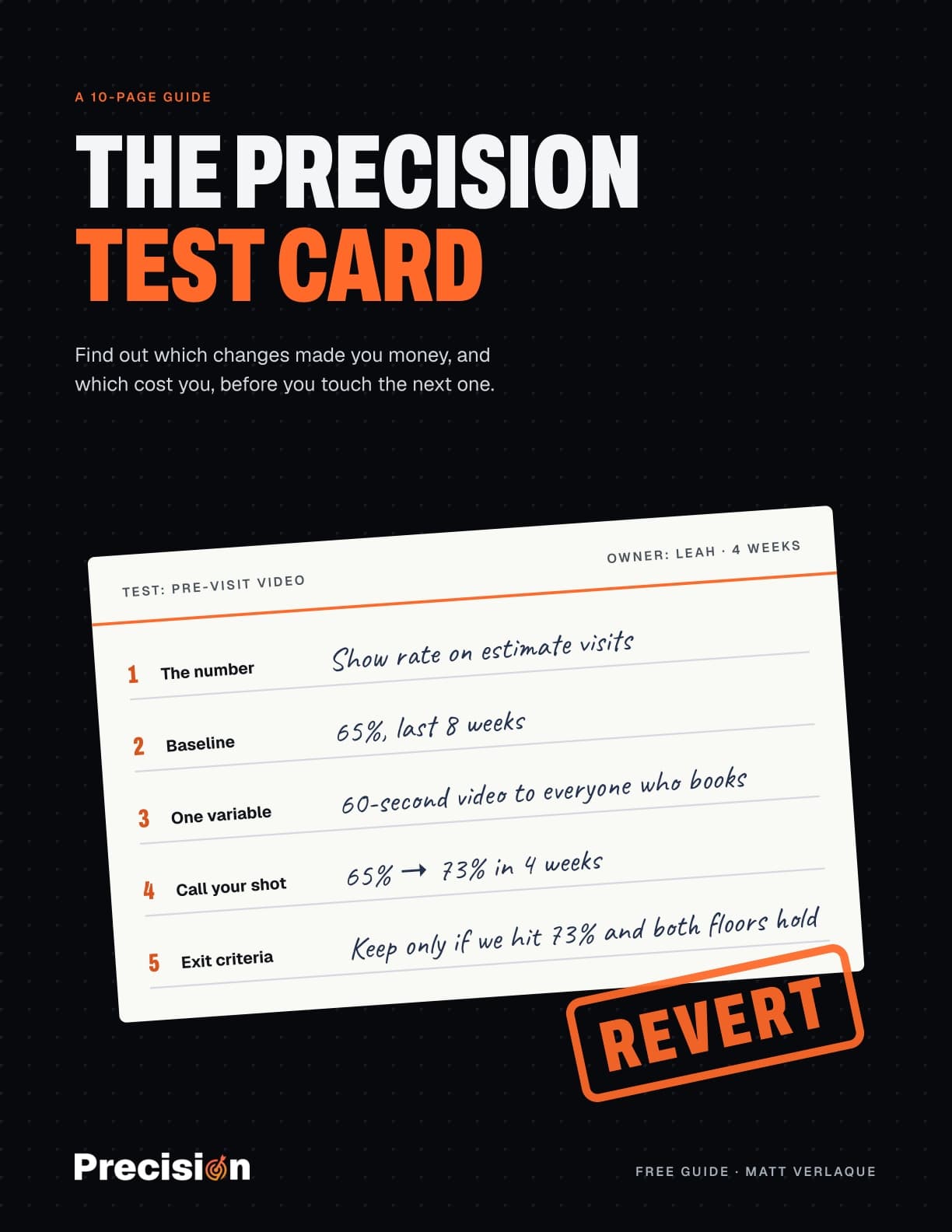
The Precision Test Card, the cover

Sound familiar?

The change you liked
cost you sales

Most of us love new ideas - it's why we started a business. You tweak your sales script, close a few deals, and chase another change next month.

It stays until something breaks again. Meanwhile your team deflates because another "I think this'll be better" sounds like you're making up work for them.

Small teams don't have the traffic for real A/B tests, so we change several things at once. One number climbs while close rate drops, and nobody knows why.

Changing stuff without a written bar hides what broke. Write five lines first, and revert by default unless the numbers prove it.

What you'll catch

Know what worked
before the next fix

  • Catch an execution gap before you rewrite a playbook your team isn't following yet.
  • Separate two-way doors you can undo from big calls like parting with a leader.
  • Set hard floors on your other numbers so one win can't sink close rate or cash.
  • Walk your team through a test using real numbers so they know you thought it through.
  • Roll back a change you liked when the numbers miss, so only proven fixes stick.
  • You'll keep a log of every win and rollback so you never repeat a test that flopped.

A worked sample

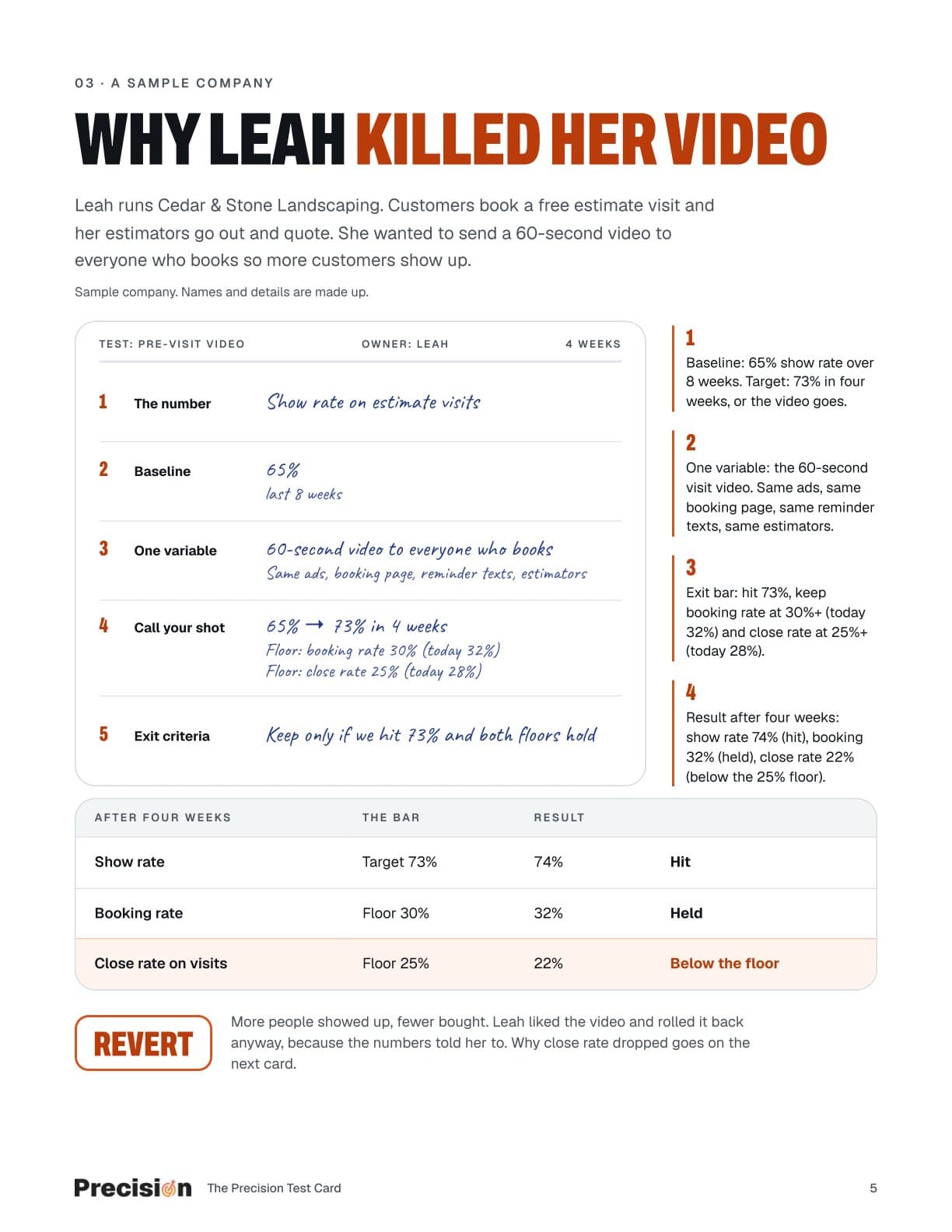
Why Leah killed
her estimate video

  1. 1

    One variable: a 60-second visit video, keeping ads, texts, and estimators untouched.

  2. 2

    Exit bar set first: 73% show rate, 30%+ booking, 25%+ close rate.

  3. 3

    Show rate hit 74%, close rate dropped to 22% - she rolled it back.

A finished One-Page Morning Brief for a sample commercial painting company
The worked example page for Cedar & Stone Landscaping - a sample company with made-up names and numbers.

How to run it

Run your next change
by the numbers

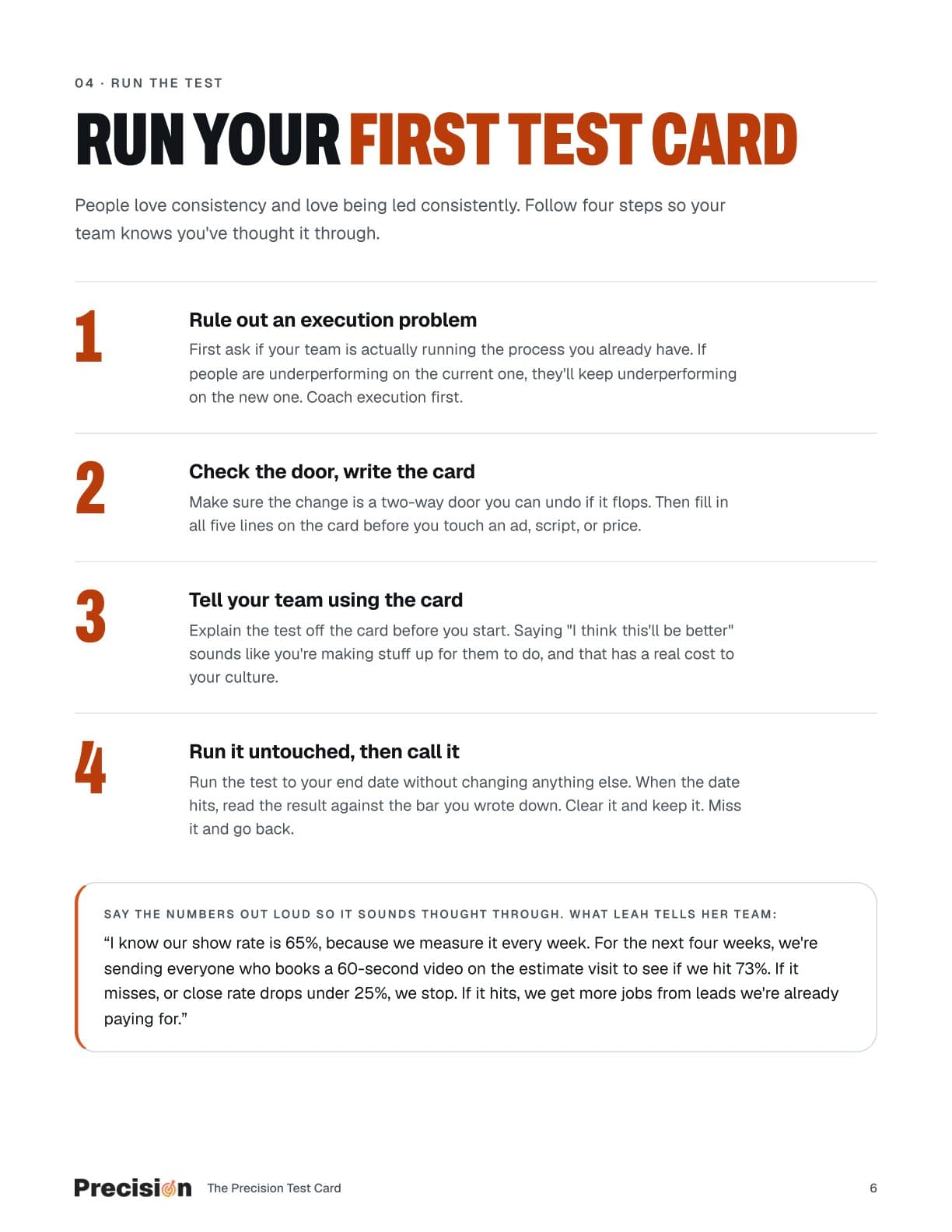
  1. 1

    Check execution, write the card

    Check that your team runs today's process and you can undo the change. Then write all five lines first.

  2. 2

    Walk your team through it

    Read the numbers, target, and exit bar straight off the card so your team sees you thought it through.

  3. 3

    Run untouched, then call it

    Leave everything else alone until your end date. Clear the bar and keep it. Miss it and go back.

Matt Verlaque talking at a desk in the Precision studio, a camera in front of him

A note from Matt

Why I had to put
a check on myself

Ever roll out a great idea and watch your team deflate?

I love change, and most founders do - something different every day is why we started businesses. The catch is every human has a finite capacity for change.

I default to change, so I've built systems to keep myself in check. Otherwise we keep every tweak that doesn't burn the business down and do it again next month.

My team is killer, and I still worry about how much change they can absorb before it wears them down.

The fix is one rule before you change anything: write five lines on a card, and revert by default unless the numbers prove it.

Matt VerlaqueFounder, Precision
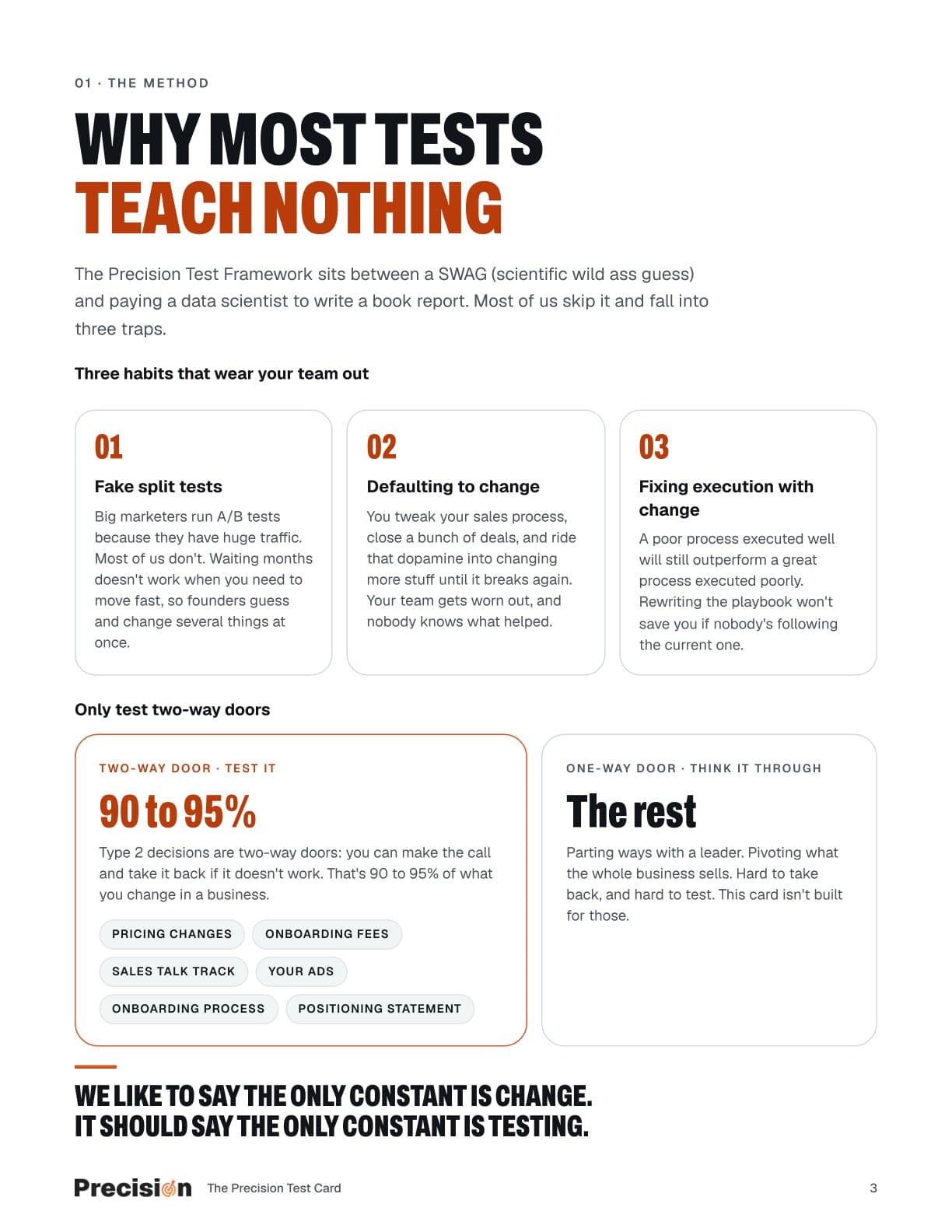
Inside the PDF

What's inside
the 10-page guide

  • Three testing traps

    Why small teams guess, plus the two-way doors worth testing.

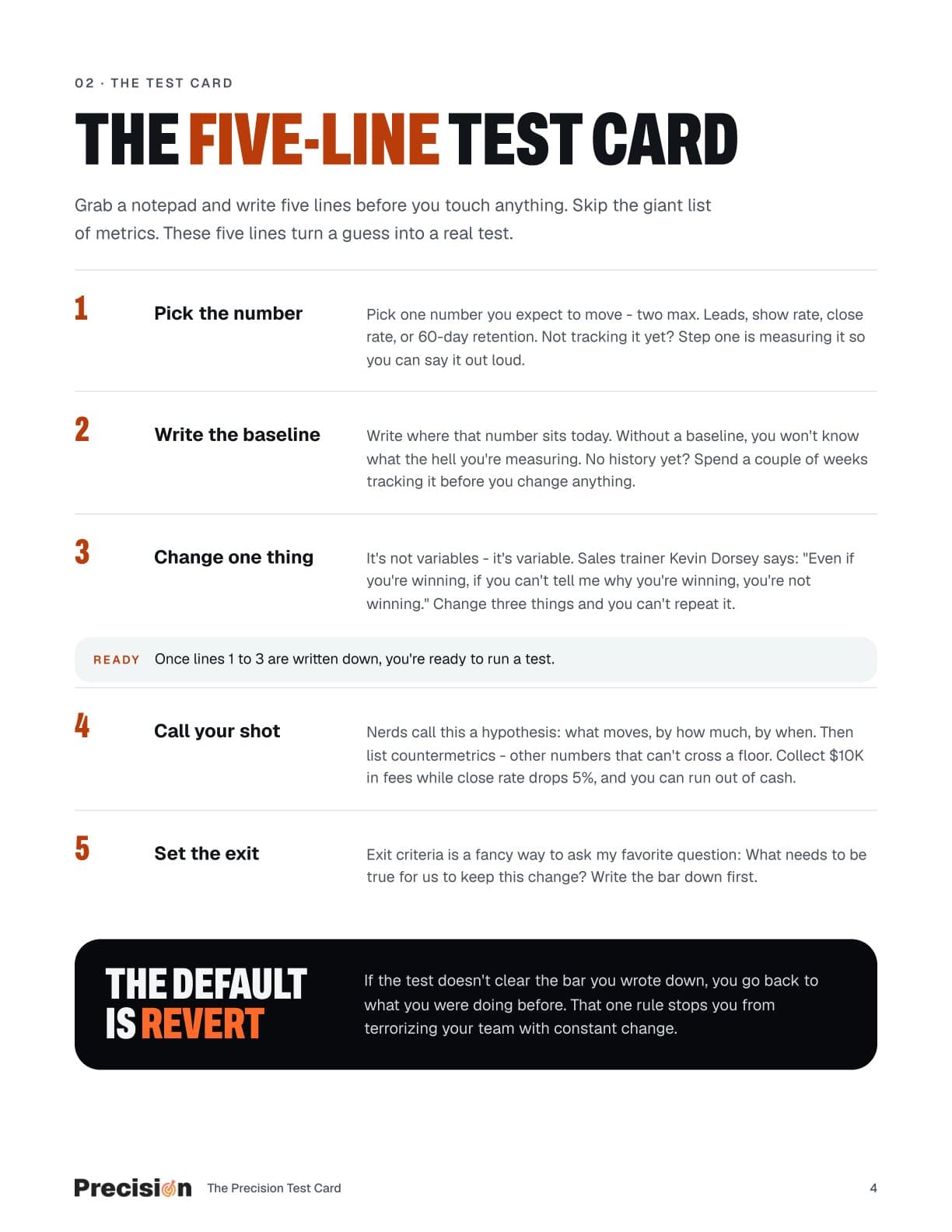
  • The five-line card

    Pick the number, baseline, one variable, target floors, and exit bar.

  • Worked sample company

    Why a sample landscaping founder rolled back a video she liked.

  • Rollout steps and script

    Four steps and a sample script to brief your team.

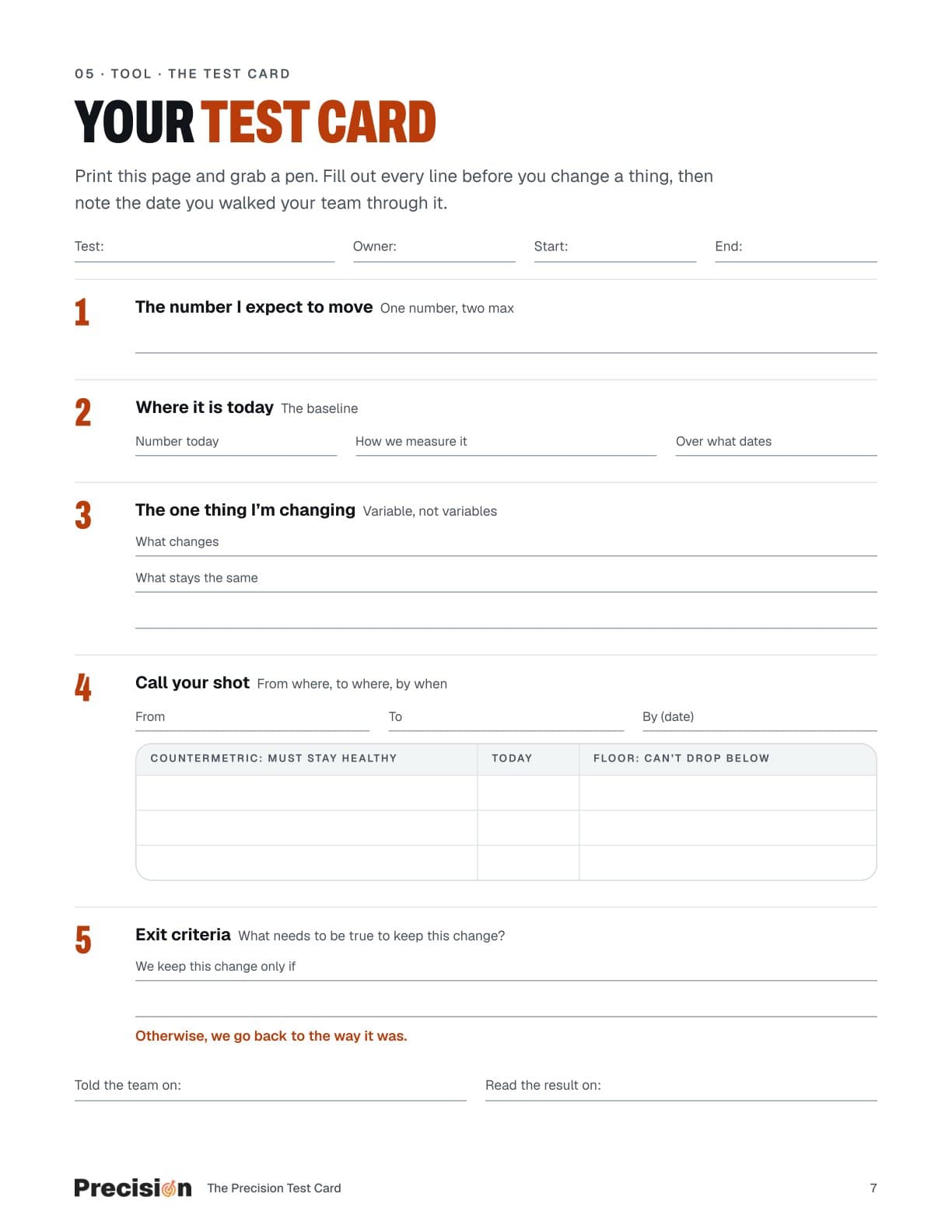
  • Printable blank card

    Print one page and fill all five lines before changing anything.

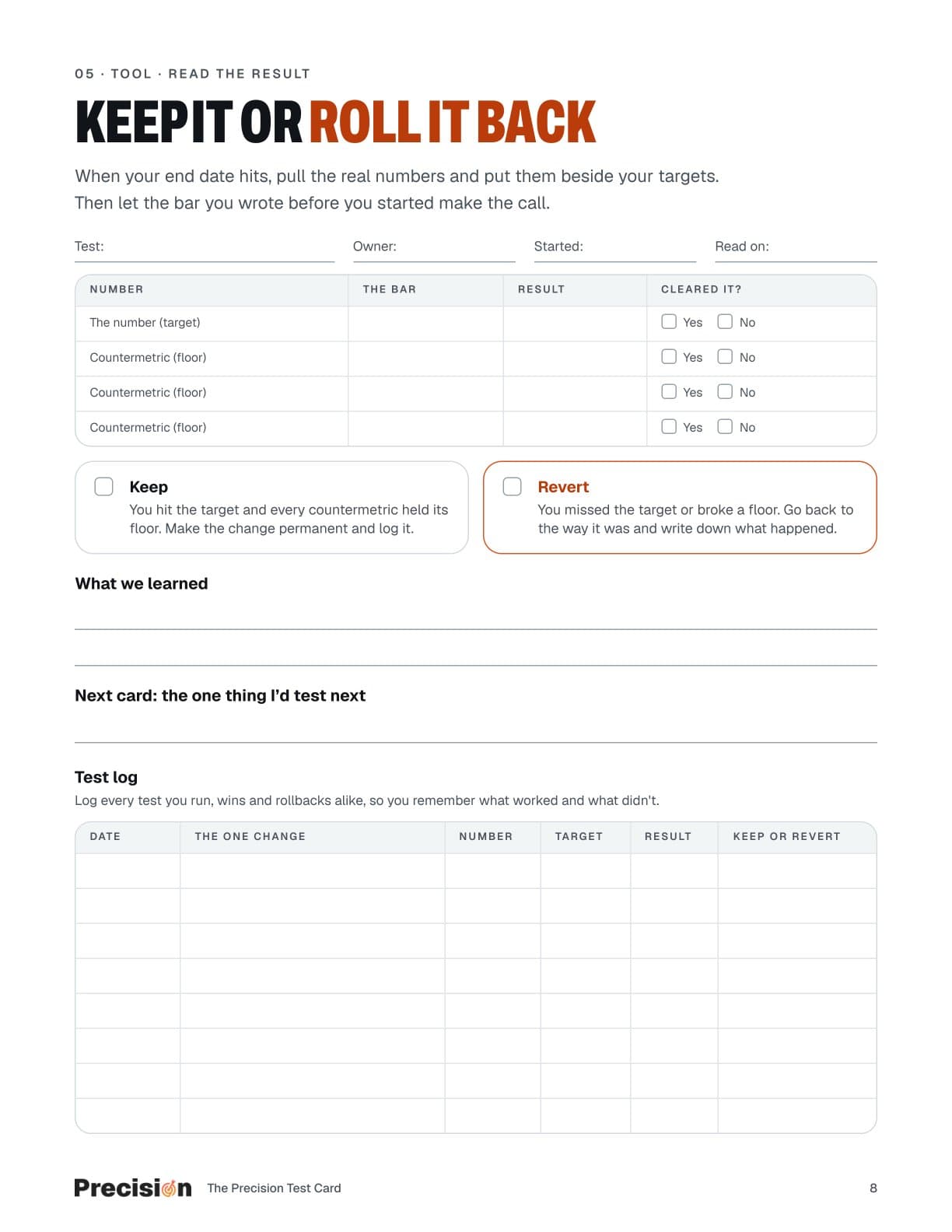
  • Result sheet and log

    Compare real numbers to your bar, then log wins and rollbacks.

Common questions

Straight answers
before you start

We don't have A/B test traffic. Still worth it?

Yes. Real split tests need huge traffic or months of waiting. This card gives a small team a disciplined way to test a change in weeks.

What if we aren't tracking the number yet?

Your business isn't broken, and measuring it is step one. Spend a couple of weeks tracking your baseline first. At least 30 to 40% of my quarterly projects started right there.

Can I test two changes at once?

No. Change two things at once and you can't tell which one moved the number. Even if it wins, you won't know why, so you can't repeat it.

How long does a test have to run?

Long enough to see the number move. A show-rate test might run four weeks, while an onboarding change might compare 60 or 90 day retention against similar customers.

What about big calls, like parting with a leader?

No. Those are one-way doors you can't walk back. This card is built for two-way doors - pricing, ads, scripts, and onboarding changes you can undo if they flop.

Before you touch anything

Let the numbers
call your next change

Grab The Precision Test Card free, fill in five lines before you tell your team, and keep only the changes that prove themselves.

Free PDF. Lands within 5 minutes. Unsubscribe any time.