
Precision

Free guide: The Clarity Memo

Stop making
$50K decisions
on a gut feeling

Staring at a big hire or price change? This free PDF gives you the written memo that forces clear thinking before you bet real money.

Free. Lands in your inbox within 5 minutes. Unsubscribe any time.

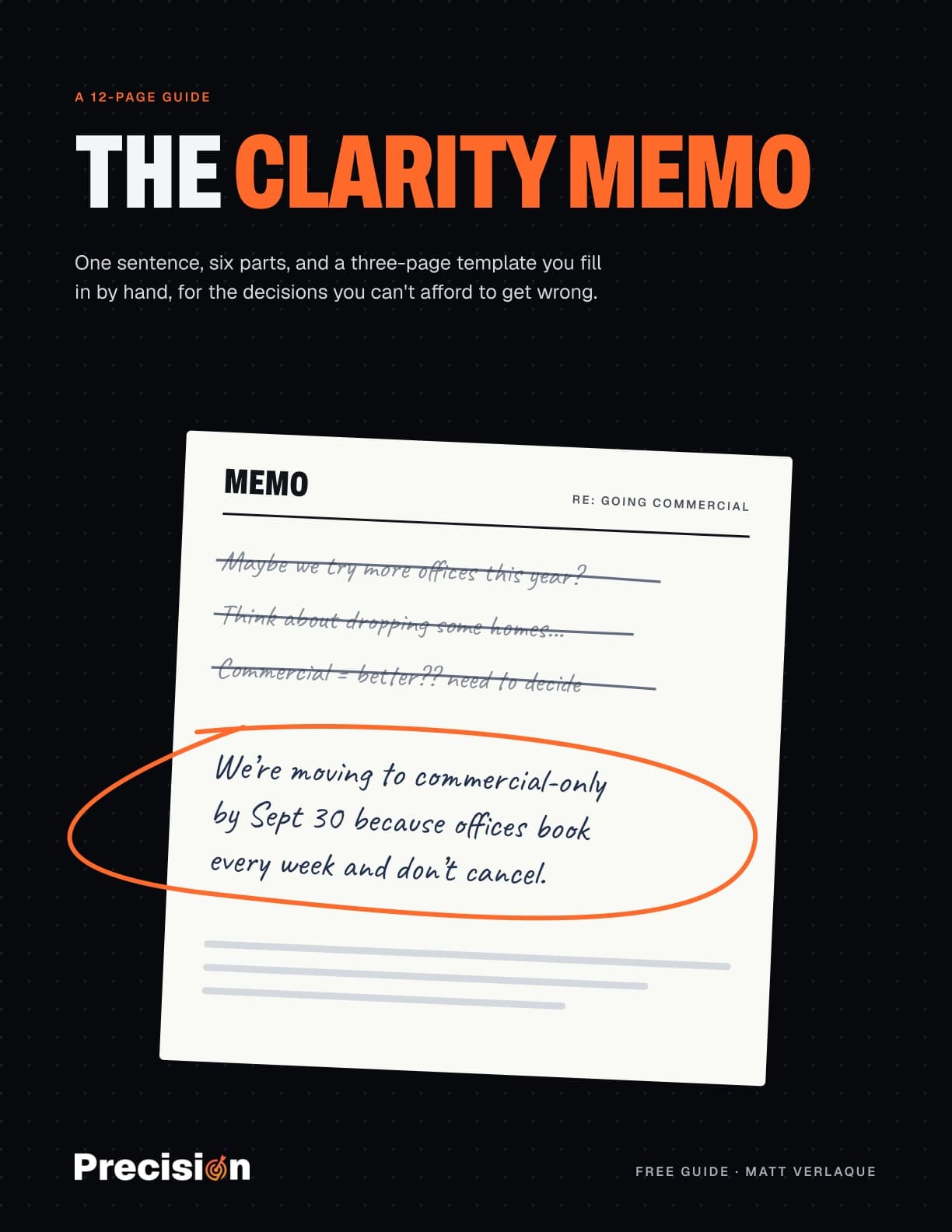
The Clarity Memo, the cover

Why big calls miss

When moving fast
starts costing you

Most of us got here by moving fast and figuring it out as we go. That works until a single decision is big enough to sink you.

You chew on the same hire, price change, or new channel three or four times. Every talk goes nowhere because nobody separated proven facts from gut guesses.

So you toss a few slides together or talk it out in a meeting. Six months later, the team still can't tell you if the call worked.

Every founder is an optimist, which makes winging big calls feel right. Writing the whole bet down forces you to think straight first.

What changes

Know what you're
really betting on

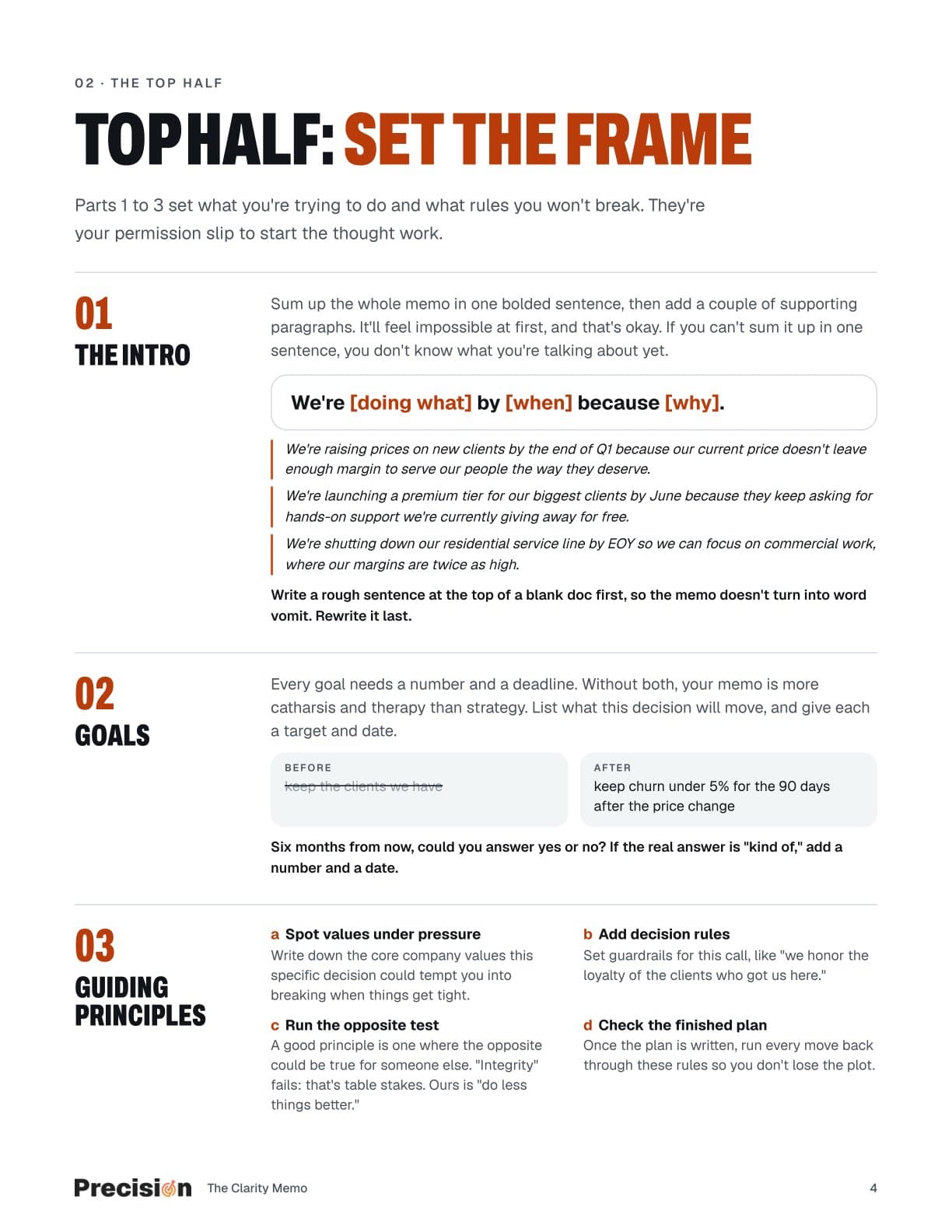
  • Boil the whole call down to one bold sentence covering what, when, and why.
  • Turn fuzzy hopes into yes-or-no goals with a real number and a hard deadline.
  • Catch empty values with the opposite test so your rules hold up when things get tight.
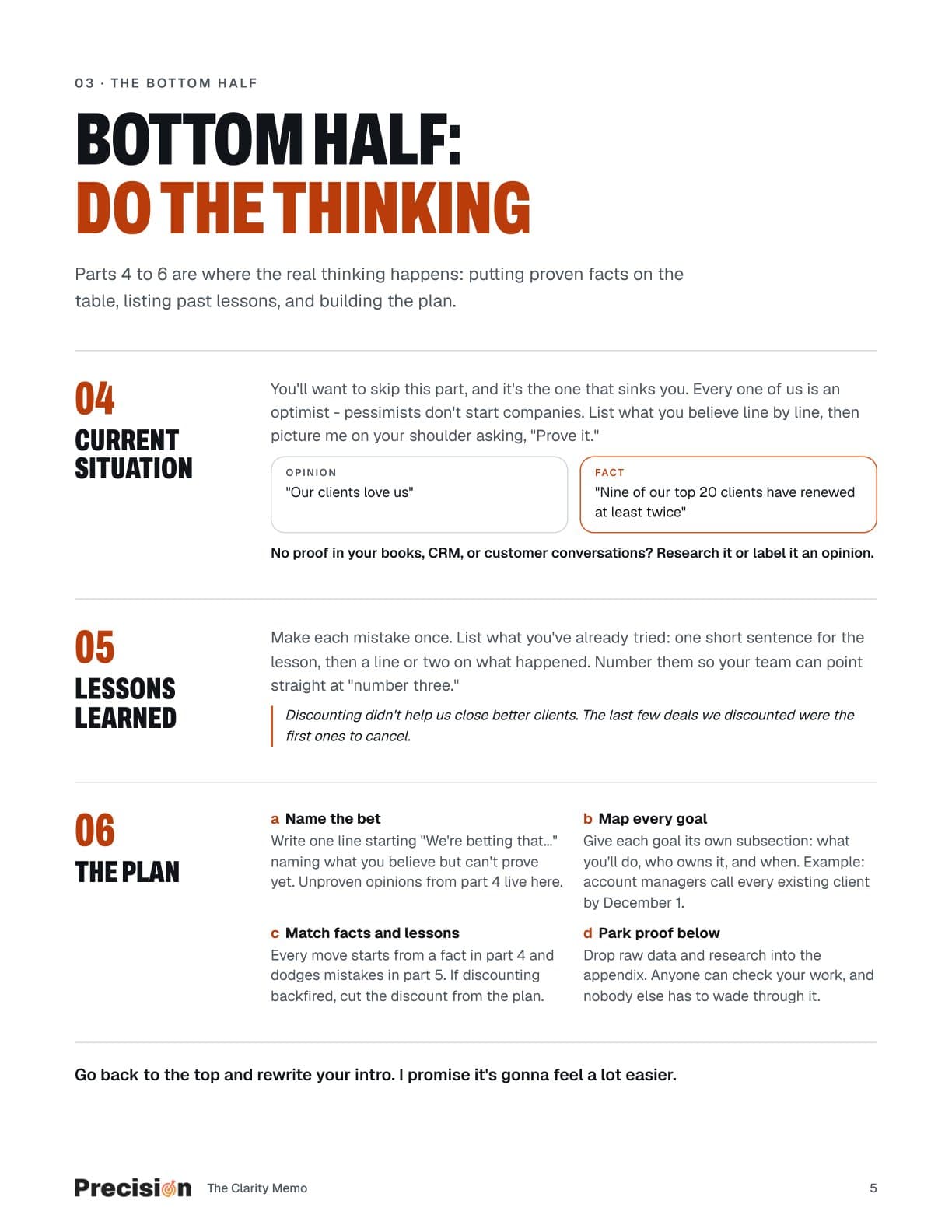
  • Separate proven facts from founder optimism by tagging every unproven guess as opinion.
  • Stop paying for the same mistake twice by numbering past lessons right above your plan.
  • Hand your team a scannable doc with one owner and one date on every move.

See a finished memo

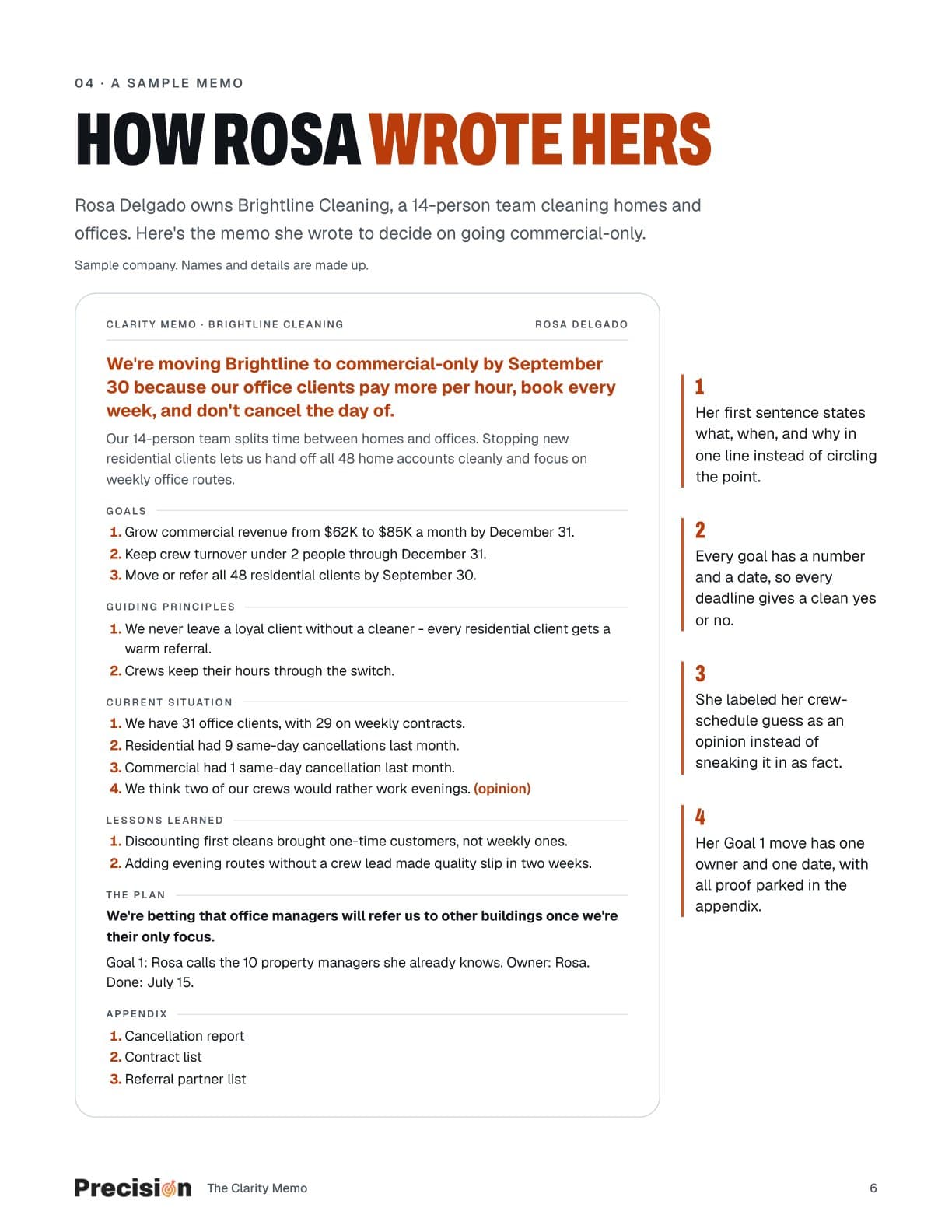
How a sample memo
lays out the call

  1. 1

    Line one nails what Brightline is changing, by September 30, and why.

  2. 2

    Every goal carries a number and date, while guesses get tagged opinion.

  3. 3

    Goal 1 gets one owner and deadline, with raw proof in the appendix.

A finished One-Page Morning Brief for a sample commercial painting company
A sample memo from The Clarity Memo for a 14-person cleaning company. Names and details are made up.

How to use it

Write your first memo
in three steps

  1. 1

    Set your frame first

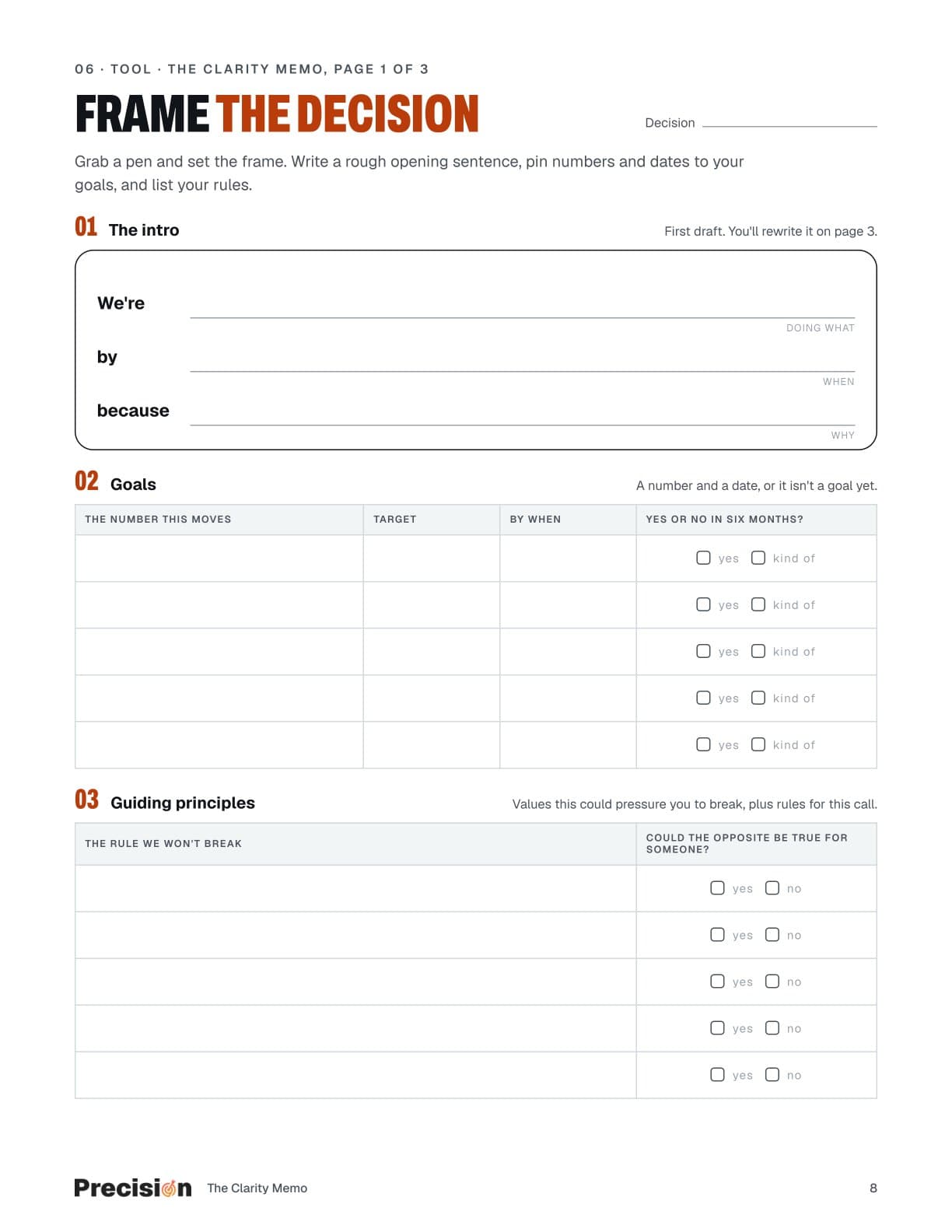
    Pick one call you've chewed on. Write a rough opening line, set goals with numbers and dates, and list your rules.

  2. 2

    Do the real thinking

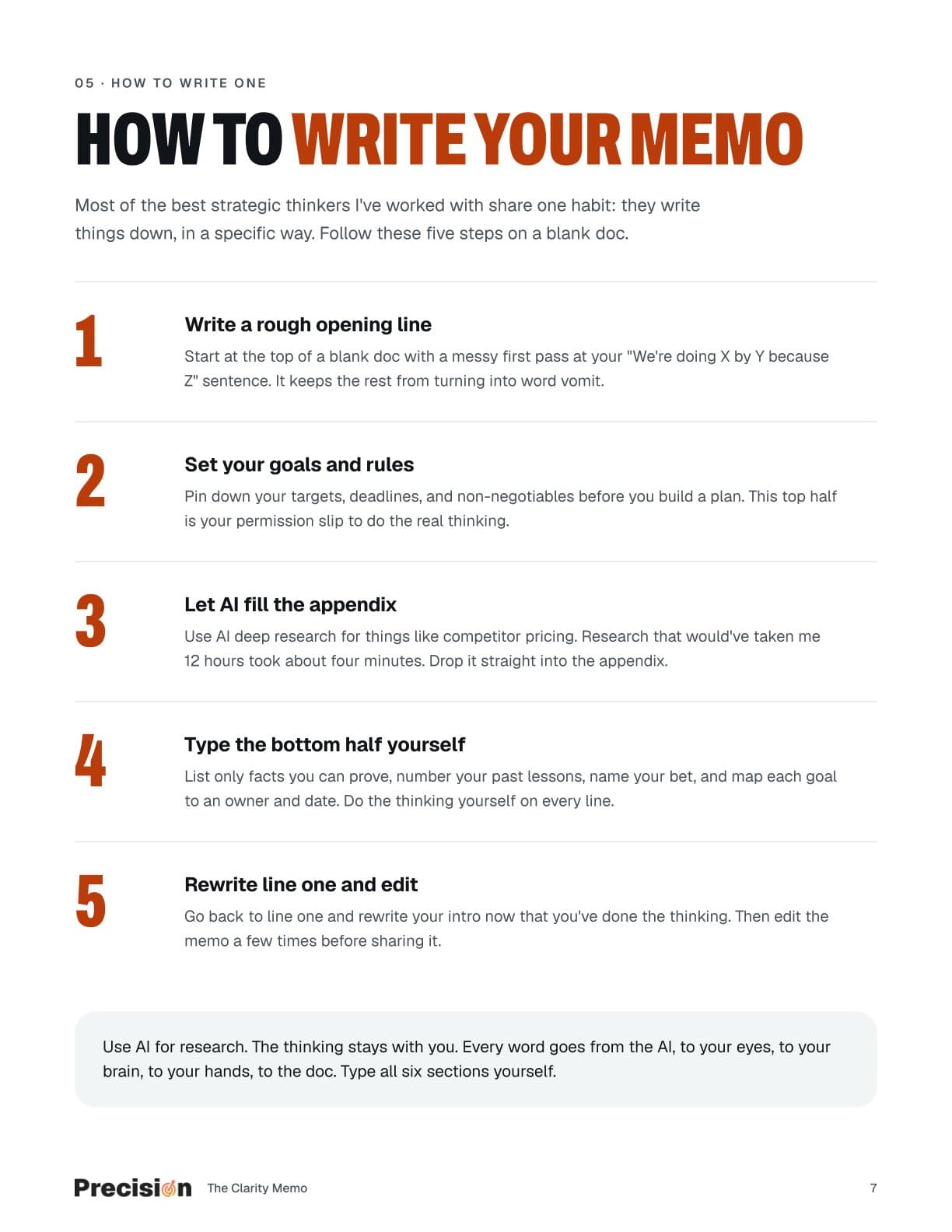
    Let AI pull research for the appendix, then write the facts, past lessons, your bet, and every owner yourself.

  3. 3

    Rewrite line one and share

    Tighten your opening line once the thinking is done. Bold key points, number every item, and circulate it for comments.

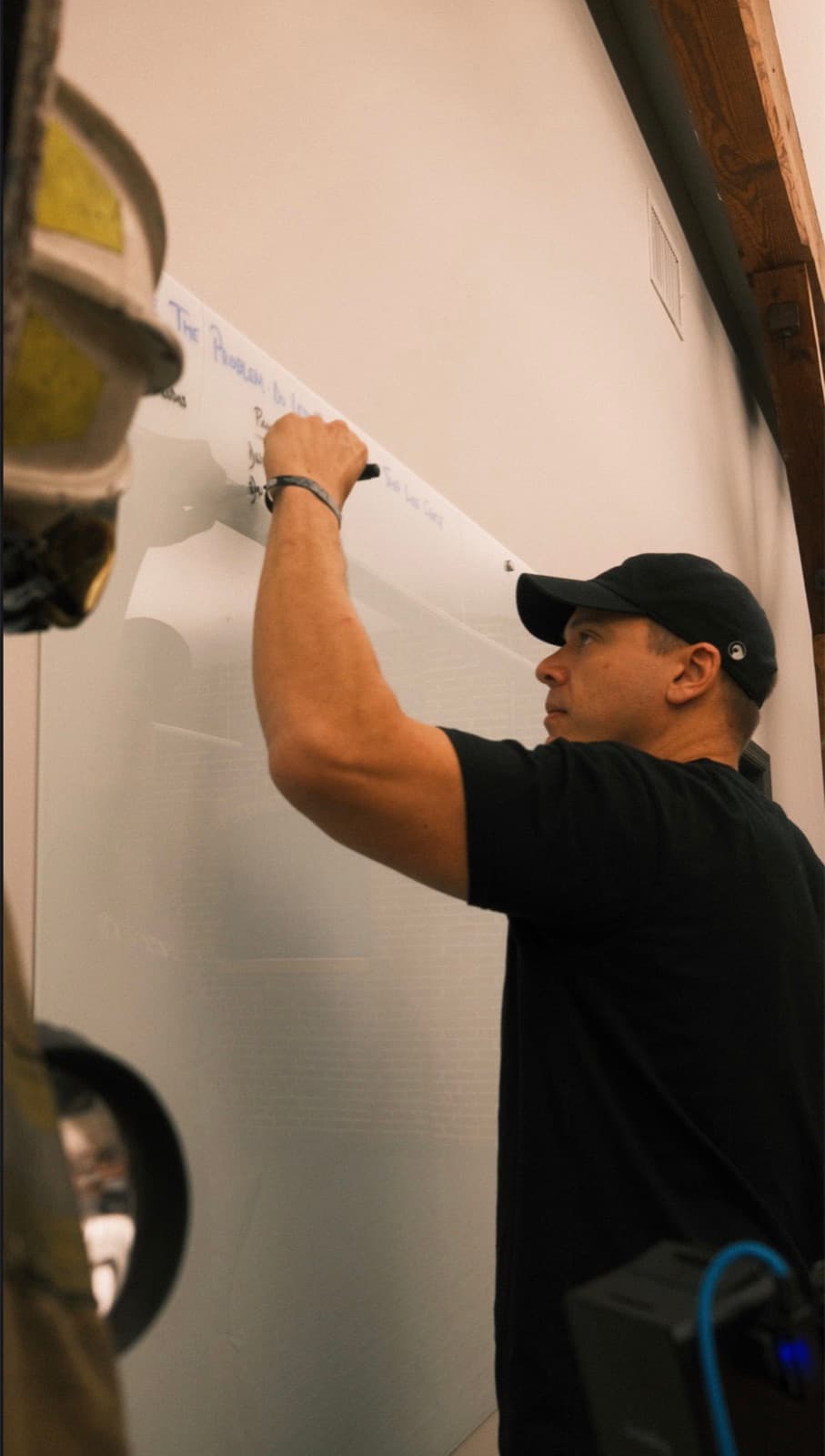
Matt Verlaque writing on a whiteboard

A note from Matt

How I stop myself
from winging it

In 2004, Jeff Bezos banned PowerPoint at Amazon. Slide decks are quick to slap together and brutal to sit through.

A written memo flips that. It's hard as hell to write well, and your team gets the point fast.

What works at Amazon's size won't fit every company, so I built my own version. I pull it out on decisions I can't afford to get wrong.

I tend to just go. This forces me to think first.

Pick one decision you've chewed on three or four times - a hire, a price change, a new channel - and run it through The Clarity Memo.

I've never regretted the time I've spent.

Matt VerlaqueFounder, Precision
What's inside

Everything inside
The Clarity Memo

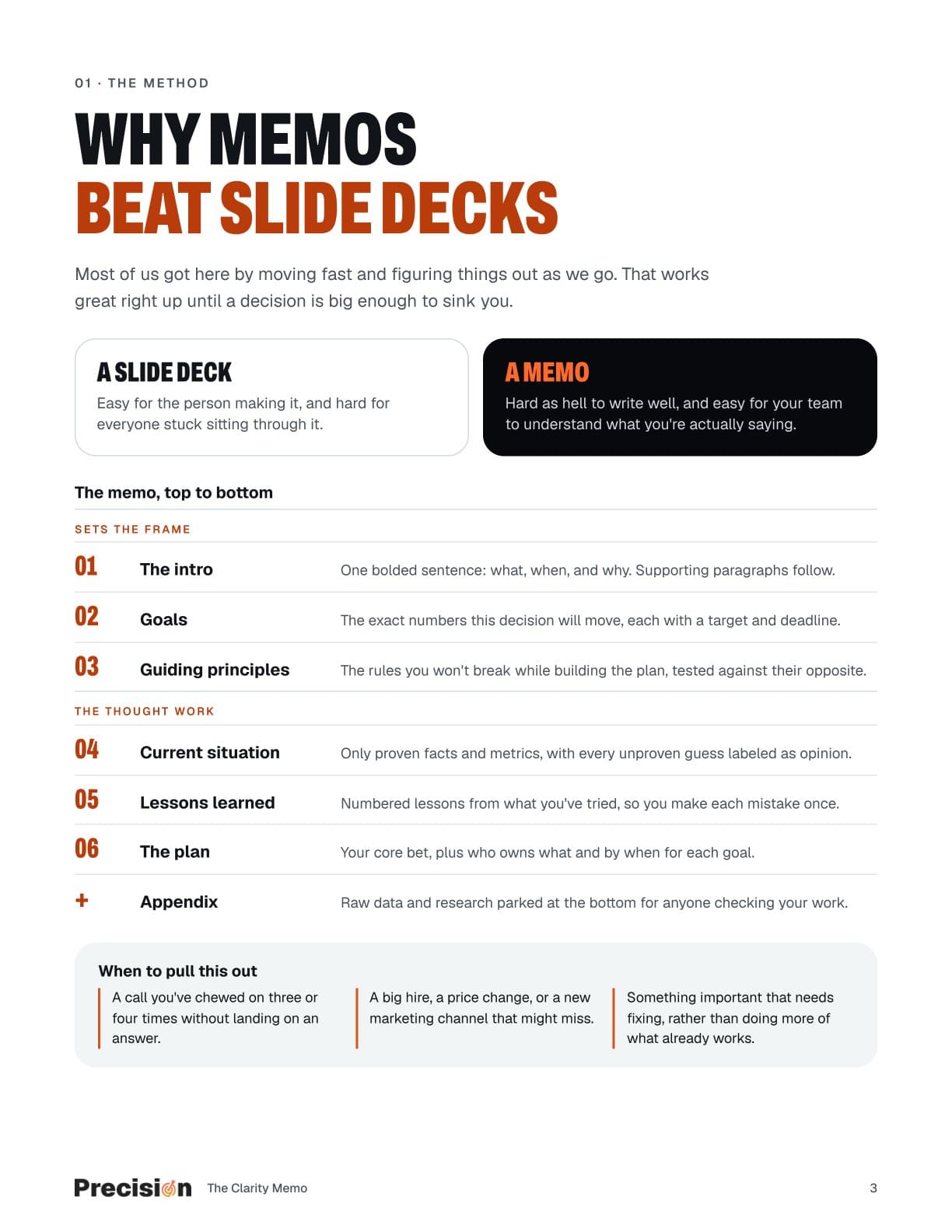
  • Memos vs. slide decks

    Why written memos force clear thinking and when to pull one out.

  • The six memo parts

    One-sentence intro, numeric goals, principles, proven facts, past lessons, and your plan.

  • Rosa's sample memo

    A made-up 14-person cleaning company deciding whether to go commercial-only.

  • How to write it

    Five steps on a blank doc, using AI only for appendix research.

  • The three-page template

    Print it out and fill in every part with a pen.

  • Sharing with your team

    Format for scanners, number every move, and invite real pushback.

Common questions

What founders ask
about this memo

Can't AI just write the memo for me?

Use AI for research in the appendix, then type all six parts yourself. If you outsource the critical thinking to AI, you might as well skip the memo.

I don't have investors or a board. Why bother?

Most of my memos never leave the building - they're for me and my team. You write one to slow down and think straight before a big call goes sideways.

Do I really have to write six pages?

No. Amazon used six pages and Procter & Gamble calls theirs a one-pager even when it runs longer. What works at Amazon's size won't fit every team. Write what the call needs.

Is the intro really one sentence?

Not quite. It starts with one bold line summing up what, when, and why, followed by a couple of short paragraphs. Write a rough pass first, then rewrite it last.

What if I don't have all the facts yet?

That's why part four exists. If a line isn't backed by your books, CRM, or customer conversations, research it or tag it as opinion so you see what you're betting on.

Get the free PDF

Think straight before
the next big call

Grab The Clarity Memo, pick one call you've chewed on three or four times, and separate the facts from the guesses.

Free PDF. Lands within 5 minutes. Unsubscribe any time.